
How Can Education Institutions Use Video Distribution for Student Engagement?
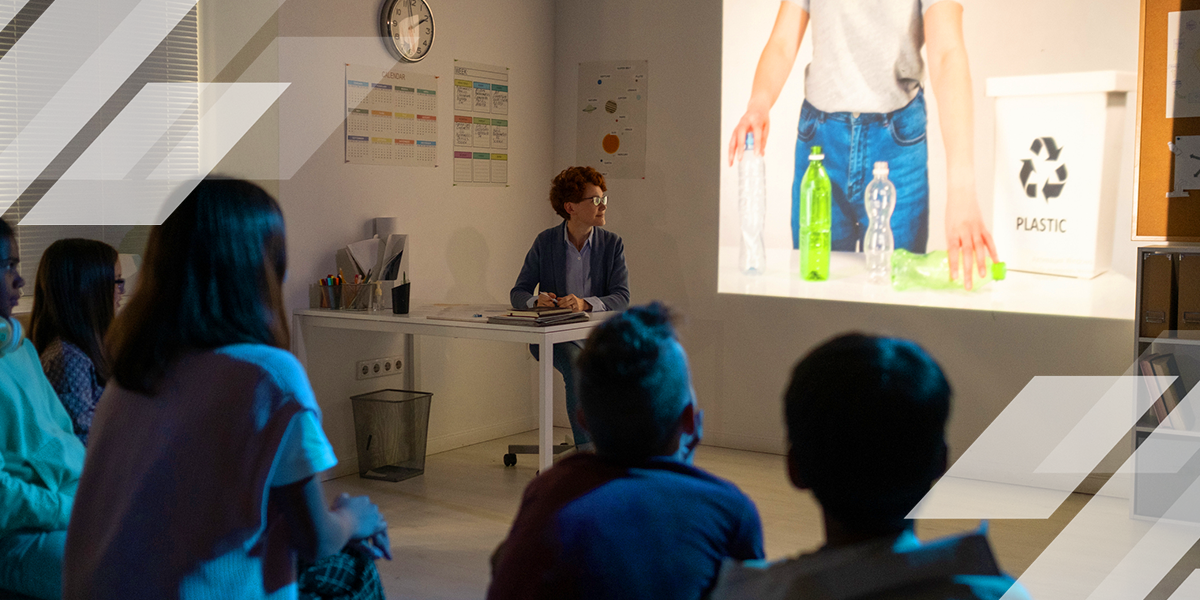
To foster true engagement, educational institutions must create a connected and dynamic campus environment. They must hold students' attention during a lecture and make them feel informed, involved and part of a vibrant community from the moment they step on campus.
The Challenge of Keeping Students Engaged
One of the biggest challenges educators face today is competing for students' attention, a struggle inside and outside the classroom.
In the classroom, smartphones and other personal devices are often within reach, making them a perfect source of distraction during the standard, monotonous lecture. Since this teaching format offers a passive learning experience, students are likely to disengage and seek easy distractions. It's also challenging to maintain engagement with students who have diverse learning styles.
Beyond the classroom, schools struggle with maintaining effective campus-wide communication. Relying on email could cause important events and deadlines to get lost in the digital noise. Static posters are also ineffective at reaching a busy, mobile student body, making students feel disconnected from the campus community.
Enhancing Student Engagement With Video Distribution Systems
Video distribution systems offer a powerful solution for enhancing engagement. They allow for the management and delivery of video content to multiple screens and devices across a campus.
From projectors and displays to digital signage in hallways and in common areas, educators can transform classrooms and the entire campus into more dynamic and visually engaging environments.
As a multifaceted teaching format, video accommodates different learning styles:
Visual learners: Video distribution systems deliver high-quality images, demonstrations, animations and real-world footage, allowing visual students to see the information and learn from it.
Auditory learners: The audio track of a video, whether it is a narrator's explanation or the sounds of a particular environment, directly caters to auditory learners' needs. Audio reinforces the visual information and provides a parallel path for comprehension.
Reading/writing learners: Video systems are excellent for this group as they display text details, captions and subtitles. By reading along, students remain engaged during the lecture. Instructors can also incorporate text-based content alongside video presentations.
Kinesthetic learners: The watch-and-do model is ideal for kinesthetic students who learn by doing, moving and touching. Pausing a how-to video allows these students to perform a task as they follow along, making learning more active and engaging.
Benefits of Video Distribution Systems
Video distribution technology offers various advantages to educational institutions:
Enhanced Learning Experiences
Teachers can use video to create engaging lessons that present complex concepts clearly. An effective strategy is the flipped classroom model, where students watch instructional videos at home and arrive at class better prepared for hands-on activities and problem-solving.
Access to Remote Resources and Experts
Video distribution breaks down the physical walls of the classroom. Educators can take students on virtual field trips to museums and historical sites. It also brings guest lecturers from anywhere in the world into the classroom via live video, providing students with access to a wealth of knowledge and diverse perspectives.
Support for Project-Based Learning
Students can work together on video projects, record their presentations, and later present their work to the class. In learning spaces, video distribution systems allow educators to showcase student work and display different examples or project components.
Seamless Communication and Information Sharing
Video distribution systems are suitable for campus-wide communication. Implement digital signage to display announcements and event schedules. Educators can also record lectures and make them available on demand for students who were unable to attend or wish to review the material.
Examples of Video Distribution Applications in Education
Utilize video in various ways to enhance student engagement.
Laboratories: Livestream a complex scientific experiment from the teacher's bench to every student's monitor for a clearer view.
Lecture halls: Broadcast a guest lecturer's presentation to overflow rooms or to remote students.
Libraries and common areas: Display campus news, student-created materials and other content on digital signage.
Increase Engagement With Z-Band Technologies' Solutions
Z-Band Technologies offers RF video distribution (Z-TV) and Z-IP video distribution systems for educational institutions. Our solutions are engineered to manage and deliver high-quality video content to multiple screens and devices across a campus.
RF Video Distribution System
Our radio frequency-based active video distribution system distributes internally produced video content, satellite feeds and cable TV over CAT cables without requiring the school's network bandwidth.
Z-IP or IPTV
This scalable system leverages your school's internet protocol (IP) network for live and on-demand video streaming. It is ideal for the flipped classroom model and enables desktop viewing, allowing students and staff to watch video content directly on their computers.
Contact Us to Learn More
Improve student engagement with our high-quality video distribution solutions. Our experts will work closely with you to determine the right product for your school's needs and existing infrastructure.
To learn more about our solutions, contact us today to schedule an introduction call.
