The Past, Present and Future of Category Cable
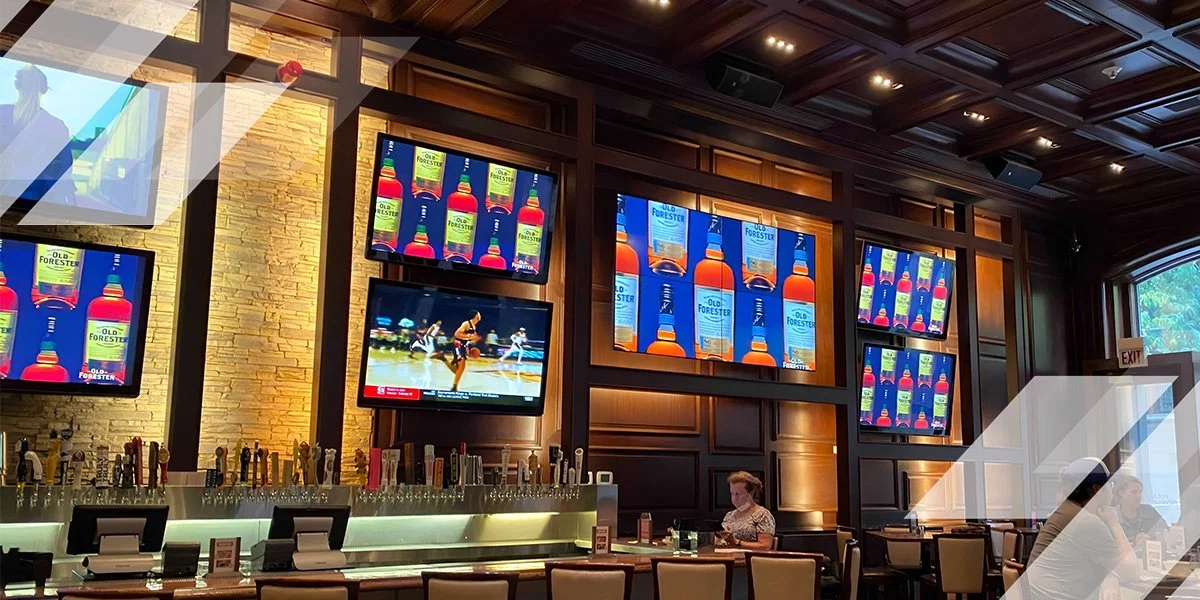
CAT cable technology has come a long way in a relatively short time; it is now a preferred option over traditional coaxial cabling in many applications. Examples of enterprise-level TV and video distribution over CAT cable include:
- Distribution of HDTV to patients’ and residents’ rooms in hospitals and long-term care facilities.
- Delivering video and television for training and recreational purposes in government installations and military bases.
- Spreading information and providing remoting learning opportunities in universities and other educational institutions.
- Satellite distribution and digital signage at casinos, horseracing tracks and other gaming facilities.
- Distributing training videos from corporate headquarters to branch offices.
- Facilitating communication with international markets to meet the demands of today’s global business environment.
The Relationship Between the Development of Category Cabling and the History of Network Cabling
When tracing the history of Category cable, and the use of structured cabling systems in general, it can be helpful to explore the history of network cabling and how it evolved from the origins of rudimentary Morse code to its use in multiple applications today.
Most of us have at least a basic familiarity with Morse code. Named for its founder, Samuel Morse, the code is a binary system consisting of dots and dashes that represent letters and numbers. In 1844, Morse used a newly invented machine, called the telegraph, to transmit a message over a distance of approximately 40 miles. The earliest versions of the telegraph relied on a mechanical clock that produced an electrical current, which enabled the transmission of Morse code via paper tape.
A French inventor named Emile Baudot subsequently invented a telegraph machine featuring a typewriter-style keyboard that enabled the sending and receiving of telegraphs on a wide scale.
Advancements in technology led to the implementation of telegraph lines that could deliver Morse code with greater speed over longer distances. According to the Network Cabling Help website, these lines were connected by a network of above-ground poles that allowed a telegraph machine on the East Coast to send a message to another on the West Coast and vice-versa. Eventually, messages could also be sent by Morse code across oceans via undersea cables, which enabled faster and more effective global communication.
This technology paved the way for what would become our landline telephone systems and, later on, networking cabling systems as we know them today.
The Advent of Modern Networking Technology
The advent of high-speed computers created the need for a more advanced type of cabling that could connect and facilitate communication between vast computer networks. In the 1970s, Xerox Corporation ultimately developed the first schematic for Ethernet cable and, along with Intel and DEC, created the first standardized Ethernet cabling system.
The original system consisted of a large coaxial backbone cable, referred to as “Thick Internet,” that enabled a distribution speed of 10 megabits per second (Mbps). A series of smaller coax cables were extended from the main cable to connect the individual workstations in the network. This original configuration was classified as a base band system, meaning it used the entire bandwidth during signal delivery, as opposed to a broadband system, which separates the bandwidth into individual channels.
In 1983, the Institute of Electrical and Electronic Engineers (IEEE) developed the first official standard for Ethernet cabling. Then, in 1984, IBM unveiled Token Ring — a local area network that could transmit data at a speed of 4 Mbps via a thick, two-pair shielded cable with large, four-pole connectors. While Token Ring was viewed as revolutionary at the time, and is still used for certain networking applications today, the combination of its large size, high cost and lack of versatility eventually caused it to fall out of favor.
The Development of UTP Cable
The next major cabling development was the use of unshielded twisted pair (UTP) cabling and the introduction of Category 1 cabling in 1985. UTP is the ordinary copper wiring used to connect most home and business computer networks with the telephone company. It consists of two insulated copper wires that are twisted around each other to eliminate crosstalk. Unlike shielded cabling, UTP does not include a layer of foil or other conductive material. This makes UTP more flexible and less expensive than its shielded counterpart.
In addition to its low cost, UTP cable enables the fastest signal distribution of any copper-based cabling medium. It is also extremely easy work with in terms of installation and making additions to a network or video distribution system. On the downside, UTP cable is more susceptible to radio frequency and electromagnetic interference, due to the absence of shielding. They are also more prone to electric noise.
The term “Category” refers to the specification for the type of UTP cabling systems in use today. These systems consist of the wiring and additional equipment, such as junctions and connectors. As mentioned, CAT 1 represents the first version of Category cable to hit the market. It’s typically used as telephone wire, and features a data rate of up to 1 Mbps. According to Firewall.cx, an upgraded, 4 Mbps Category cable variant, known at CAT 2, was developed shortly after the introduction of CAT 1 for use with Token Ring networks and older terminal systems. Neither CAT 1 nor CAT 2 cable are suitable for use in today’s modern networks and systems, however.
TIA/EIA 568 and the Evolution of Cabling Standards
As the use of structured cabling systems in commercial applications continued to grow, there became a need to develop a standard for defining a generic telecommunications wiring system that could adequately support multi-product, multi-vendor environments.
In the mid-1980s, the Telecommunications Industry Association (TIA) and the Electronics Industry Association (EIA) began work on a uniform wiring system that became known as TIA/EIA 568 Commercial Building Telecommunication Cabling standard. Released in 1991, TIA/EIA 568 clearly defined how to design, build and manage a structured cabling system; with “structured” meaning that the system must consist of integrated blocks that must meet specific performance requirements.
While there have been several TIA/EIA 568 updates and modifications over the years, the basic standard identifies parameters for each component of a cabling system:
- Work area: Requires the installation of two electrical outlets at each wall plate — one for data and one for voice — to enable the horizontal wiring to connect the work area equipment with the telecommunication closet.
- Horizontal wiring: Defines the maximum allowable distance for the horizontal wiring running between the telecommunication closet and individual communication outlets as 90 meters. An additional six meters is allowed for patch cables at the workstation and closet, although the combined length can be no greater than 10 meters.
- Telecommunication closet: There may be an unlimited number of closets containing the telecommunication equipment used for facilitating horizontal wiring connections. The layout can include several closets per floor, if necessary.
- Equipment rooms/main cross-connects: The standard calls for the establishment of an equipment room to serve as the termination point for the backbone cabling connected to the telecommunication closets. In a multi-building setting, the equipment room can serve as the cross-connection point for the entire facility.
- Backbone wiring: Backbone wiring provides interconnection between the equipment rooms and telecommunication closets throughout the facility. When UTP cabling is used, the backbone cabling length is restricted to a maximum distance of 90 meters.
- Entrance facilities: The entrance facility is the site of the building’s telecommunication service entrance and backbone connections, as well as the demarcation point that provides the interconnection to the local exchange carrier’s telecommunication closets. The TIA/EIA 568 standard suggests, but does not stipulate, that the demarcation point should be 12 inches from where the local exchange carrier’s facilities enter the building.
The original version of the TIA/EIA 568 standard was based on the CAT 3 cabling system, which reached its peak of popularity in the early 1990s; it represented the latest advancement in Category cabling at the time. CAT 3 cabling features a data rate of up to 10 Mbps and a maximum potential bandwidth of 16 MHz. The most common use for CAT 3 cabling these days is for data transmission in two-line telephone systems and older Ethernet installations. It does not offer the speed and bandwidth required for today’s advanced video distribution systems, telephone systems and computer networks.
Category 3 and subsequent cabling systems are comprised of four pairs of twisted copper wires. This facilitates the seamless convergence of voice, data, and video over one piece of structured cable, as one pair of copper wires can be devoted to each of these functions and provide additional video and TV distribution capabilities, as needed.
The Continuing Evolution of Category Cable
The evolution of Category cable can be seen in the numerous upgrades that have been introduced over the past two decades:
- Category 4: CAT 4 cable is viewed as an enhanced version of CAT 2 cable, as it was primarily designed for use with Token Ring networks and not Ethernet applications. As such, it’s no longer used except in antiquated telephone systems and data networks. CAT 4 cable offers a transmission speed of 16 Mbps.
- Category 5: CAT 5 Ethernet cabling is the successor to Category 3 cabling. Introduced in 1995, CAT 5 cabling is actually the first Ethernet cable to offer 10/100 Mbps, meaning it can support either 10 or 100 Mbps applications at bandwidths of up to 100 MHz. Its compatibility with 100 Mbps speeds led CAT 5 cable to be referred to as “fast Ethernet.” In addition to Ethernet data, CAT 5 cabling can also distribute video and telephone signals at distances of up to 100 meters, which meets the EIA/TIA 568 standard.
- Category 5e: Unveiled in 2001, CAT 5e is essentially an updated edition of Category 5 cabling. A significant difference is that CAT 5e was specifically designed to minimize crosstalk, which is the undesired transmission of signals between data channels. As a result, it can support speeds of up to 1 Gbps at a maximum distance of 55 meters.
Because of these characteristics, Category 5e quickly became the preferred cabling systems upon its introduction in 2001, and was also used for retrofitting facilities that still relied on early Category cable versions or coaxial cabling.
- Category 6: While CAT 5e was seen as the new standard in cabling, it did not remain as such for long. The unveiling of Category 6 cable a year later represented a major improvement in overall transmission performance. While CAT 5e was the first Ethernet cabling that could handle Gigabit Ethernet speeds, it could only support bandwidths of up to 100 MHz. While CAT 6 cable could also handle 1 Gbps over 55 meters, it could support a maximum bandwidth of 250 MHz.
Additionally, CAT 6 cable is available in UTP and STP versions. Although Category 6 cabling is an enhancement over its 5e predecessor, many users will find that CAT 5e is sufficient for most gigabit Ethernet applications, and at a substantially lower price. Additionally, Category 6 offers a higher signal-to-noise ratio and can perform better in environments with high levels of electromagnetic interference.
- Category 6a: First introduced in 2008, CAT 6a is an augmented version of CAT 6 cabling, as it can support speeds of up to 10,000 Mbps (10 Gbps). At 500 MHz, it also offers twice the bandwidth. However, CAT 6a is typically only available in shielded, twisted pair form and not UTP. Consequently, it requires the use of specially designed connectors in order to properly ground the cable.
- Category 7: Introduced in 2010,CAT 7 is a fully shielded cable that matches the 10 Gbps speed of CAT 6e, but with extra bandwidth capacity of 600 MHz. The additional layers of shielding make Category 7 more inflexible and difficult to work with than 6a cabling. Additionally, each layer must be grounded individually to maximize performance.
- Category 7a: While Category 7a cabling, which was introduced in 2013, maintains the same 10 Gbps capabilities as CAT 7, it doubles the bandwidth capacity to 1.2 GHz.
Important Category Cable Properties to Keep in Mind
There are a few key Ethernet cable properties to be aware of when designing a cabling system for your organization. For instance, the length of the cable has a direct impact on both signal distribution speed and bandwidth consumption. As a rule of thumb, shorter cable lengths are better, as the signal quality tends to decrease when traveling over longer distances.
The maximum length before signal degradation begins to occur for Categories 3 through 5e and Category 7 (at 10 Gbps) is 100 meters. For Categories 6 and 6e, the maximum length is 55 meters (at 10 Gbps).
It is also important to understand the distinction between patch and crossover cables. While the two look very much the same, they each perform different roles in a cabling system. A patch cable has the same type of connector at either end and is used for connecting dissimilar devices. A crossover cable features a T568A connector on one end and a T568B connector on the other, and is used to connect similar devices.
Ethernet cables may also contain different types of conductors, which are differentiated by the number of strands of wires within. A solid conductor features only one wire, and is designed for cabling that’s installed behind the walls of a building. As the name implies, stranded conductors consist of several strands of intertwined wires and are best used for crimping into RJ-45 connectors. They are also better suited for patch cabling applications due to their greater flexibility.
Using Category Cabling for Video and TV Distribution Applications
Starting with CAT 5e, one of the most widespread applications for Category cabling is signal distribution in enterprise-level television and video distribution systems. These can include RF and IP systems or a combination of the two.
RF distribution capitalizes on the time-tested radio frequency technologically that was originally (and still is) used to deliver over-the-air radio signals. The RF spectrum is divided into separate ranges, with each being designated for a specific technology. The RF portion comprises the 5-860MHz range. IP, which stands for “Internet protocol,” refers to a video distribution system where the signal is distributed from one device to another within a network.
An active RF/IP system consists of a 12- or 24-port master “hub” that works in tandem with a wall-mounted balun to deliver the full spectrum of RF video over one piece of structured Category cable (5e or higher). The benefit of using CAT cable is that it offers a total of eight wires. Because only two pairs of wires are required for standard 10/100 Ethernet, two additional pairs are available for RF/IP distribution. Instead of tapping into the Ethernet, an RF/IP video distribution system actually bypasses it, while avoiding excess bandwidth consumption in the process. The use of Automatic Gain Control (AGC) technology attenuates the signal between the master hub and the balun to minimize signal loss.
In systems that rely on the simultaneous distribution of RF and IP signals, the balun performs an important secondary function: It separates the signal once it reaches its final destination. The combined RF and IP signal travels through the CAT cable and is fed into an RJ-45 connector. The two signals are then broken apart and the IP signal is distributed to a secondary RJ-45 connector.
The use of Category cabling in an RF/IP video distribution system enables a process known as “cascading,” which facilitates the connection of additional hubs in a star topology. While coax cabling serves as the backbone in a cascading setup, CAT cable provides the connection between multiple devices within the distribution system. Through the use of cascading, a TV/video system can accommodate as many as 14,000 televisions or video devices. Consequently, an RF/IP distribution system that utilizes Category cabling is the ideal choice for organizations concerned about future-proofing.
Additionally, this type of system features a “plug and play” capability that makes moves and additions a fast and easy process.
A Quick Glimpse Into the Future of CAT Cable
As with virtually all technologies these days, Category cable continues to evolve in order to keep up with the data and video distribution needs of enterprises of all types. The latest incarnation is CAT 8 cable, which was designed to support 25GBASE‑T and 40GBASE-T applications developed under the IEEE 802.3 standard that was approved for publication as of June, 2016. CAT 8 cable is capable of supporting 30-meter cabling channels containing a maximum of two connectors.
Specifically developed to help data centers facing tight bandwidth constraints and to facilitate faster network speeds, CAT 8 cable offers a look and “feel” that is similar to its predecessors. Cat 8 cable can be installed using current pathways and conduits. However, some organizations may need to upgrade their infrastructure in order to support 25GBASE‑T and 40GBASE-T applications.
Z-Band features state-of-the-art enterprise RF and IP video and TV distribution systems that make use of the latest versions of Category cable. Contact us for more information or to schedule a product demonstration today!